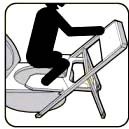
What Is Your Toilet Posture?
European or Iranian-Style?
Results of 2002 Landmark Clinical Study
One of the most remarkable clinical studies on toilet posture was carried out in 2002. The study was spearheaded by Dr Rad Saeed, an Iranian radiologist at Tabriz University of Medical Sciences.
Dr Rad's main goal was to compare the effectiveness of European (sitting) and Iranian (squatting) habits of emptying the bowels by using x-ray imaging techniques.

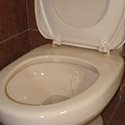

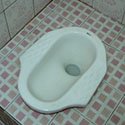
Thirty Iranians (21 males and 9 females), with ages ranging from 11 to 75, took part in the study. They were given barium enemas and instructed to evacuate waste using two types of toilets:
- Iranian-style (squatting) toilets
- European-style (sitting) toilets
SIDENOTE
==========================================
Barium enemas are performed when doctors want to study the outline and shape of the large intestine (colon). The barium sulfate injected into the colon forms a thin layer on the intestinal walls which would show up clearly on radiographs (X-ray images).
==========================================
Radiographs were taken when the subjects were having bowel movements in the
squatting
and sitting postures.
All subjects gave feedback on their experience with both toilet postures. Using the radiographs, Dr Rad Saeed also took two other measurements:
-
Anorectal angle,
which is the angle that is formed at the point where the rectum joins the anal canal. (A special muscle, the puborectalis muscle, creates a natural kink in this part of the colon to help maintain continence, ie: prevent uncontrollable or accidental release of waste.)
- The distance between pelvic floor and the perineum (area between the anus and testicles, or vagina).
SIDENOTE
==========================================
The pelvic floor is a hammock of muscles and connective tissues that in the lower abdomen which supports and hold up the abdominal and pelvic organs. It plays a key role in controlling bladder, bowel and sexual activity.
==========================================
Dr Rad wrote about his findings in a report Impact of Ethnic Habits on Defecographic Measurements which was published in the Archives of Iranian Medicine (April 2002, Vol 5 No: 2, pg 115-117).
The discoveries he made with regard to the connection between toilet posture and effectiveness of waste evacuation and pelvic floor health were astounding.
The following extracts from his report clearly revealed the serious threat posed by sitting toilets…
Effectiveness of Evacuation
"Bowel evacuation was complete in subjects accustomed to the Iranian habit (squatting), but they reported incomplete evacuation using European-style (sitting) toilet."
"They (subjects) also found that the
ground-level Iranian style toilet
more physically comfortable to use than the raised style."
(On this point, Dr Rad was candid; he admitted that a significant limitation of the study was having to select individuals who are not accustomed to using the sitting toilet posture.)
The Rectum and Anal Canal…
"With the Iranian (squatting) method, puborectalis relaxation occurred easily and
straightening of the rectum and anal canal
facilitated evacuation."
"By contrast, while using the European toilet, a
remarkable folding (bend) was created in the rectum
…and puborectalis relaxation was incomplete."
SIDENOTE
==========================================
As explained in other sections on this site, the puborectalis muscle creates a kink (bend) where the rectum joins the anal canal. This is Nature’s way of maintaining continence.
This
kink
can only be released in the squatting position. If it is not released, it is difficult to expel waste. (This explains why on a sitting toilet, a person is forced to strain for evacuation.)
==========================================
"The anorectal angle was much wider in subjects using the Iranian (squatting) method (average, 132 degrees) than the European one (average, 92 degrees)… sometimes, the angle disappeared entirely in the squatting position."
Toilet Posture and Pelvic Floor
Aside from the angle of the rectum and anal canal, Dr Rad also studied the radiographs and measured the position of the pelvic floor in both sitting and squatting positions.
He found that in the sitting toilet posture, the pelvic floor was forced downwards to a significant degree…
"The distance (ie: height of)... the pelvic floor was greater in the Iranian-style (squatting) toilet than the European one (8.4 cm vs 6.6 cm)."
SIDENOTE
==========================================
The reason why the pelvic floor is pushed lower in the sitting posture is straining. Each time one strains and push downwards (while holding the breath), the pelvic floor is forcefully depressed. It explains why pelvic disorders are so prevalent in Westernised countries where sitting toilets are used.
The study revealed that the pelvic floor can sag by about 20% in the sitting toilet posture. The stretching extends to the pelvic nerves that pass through the pelvic floor. These nerves, when damaged by stretch injury, can result in loss of
bladder control,
prostate problems
and
sexual dysfunction.
==========================================
Based on the results of his study, Dr Rad Saeed concluded that the use of the squat toilet "is a more comfortable and efficient method of bowel evacuation" than the sitting toilet.
Actually this landmark study on toilet posture has done more than what Dr Rad originally intended.
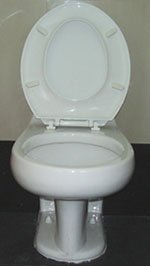
It has exposed the sitting toilet for what it is: an ill-conceived innovation that threatens the health and well-being of countless millions of people who are compelled to evacuate waste in the wrong toilet posture.
By all accounts, things would get worse before it gets better…the sitting toilet is too well-entrenched in the West. It is also gaining widespread acceptance in many countries whose peoples have traditionally been squatting populations.
In spite of the research work done by enlightened professionals like Dr Rad Saeed, there are virtually no campaigns…no crash programs…and no action plans by health authorities to educate men, women and children on the importance and need to adopt the correct toilet posture as intended by Nature -
squatting.
 Find Out More...
The result?
A growing epidemic of toilet-related ailments and diseases.
Pain, suffering and misery for those who are afflicted...
In his 1924 book Culture of The Abdomen, Dr William Welles did not minced his words when he wrote what he think of the sitting toilet:
|
"It would have been better if the contraption had killed its inventor before he launched it under humanity's buttocks." |
[Source: William Welles, DC, 'The Importance of Squatting', Natural Health Society Journal, Penrith NSW]
Additional Reading
History of The Pedestal Toilet
The Benefits of Squatting
Making The Switch from Sitting to Squatting
Go from Toilet Posture to Home Page
Have A Great Story About This Topic?
Do you have a personal account about the topic discussed on this page? Please consider sharing it. You can be sure that many people in the world would love to read about and greatly benefit from your experience. It's easy to do. Just let your words flow. Thanks for sharing!
What Other Visitors Have Said
Click below to see contributions from other visitors to this page...
We shouldn't follow blindly Not rated yet
Most Indians behaves like sheep, just blindly following, not thinking twice before accepting any new thing -- namely sitting instead of squatting.
At …
Western and squatting toilets Not rated yet
I want to visit Iran. I am disabled with several spine problems from injuries, and a bad surgery on wrong place.
The western toilet can be hard enough …
Sitting and Squatting -- The Simple Biology Not rated yet
It is interesting that I always found that the very sitting on the toilet makes (waste) evacuation harder. Muscles tighten up.
I was sure its psychological, …
After living in Iran in 1977 Not rated yet
I just stumbled accross this site looking for a colon diagram...
I had the good fortune of living in Iran for 2 years as a teenager and often "had to" …
Western sitting toilets uncomfortable Not rated yet
Unwillingly using western toilet is a mental stress to me. It causes incomplete evacuation of waste. Also, the thighs touch insanitary surface.
Click here to write your own.