Home
CURRENT MODEL
NEW EVACO TOILET
Why SQUAT?
Book on Squatting
Testimonials
FAQs
Sitting vs Squatting
Appendicitis
Constipation
Colon Cancer
Crohn's Disease
Ulcerative Colitis
Diverticulosis
Hemorrhoids (Piles)
Heart Attack
GERD/Hiatus Hernia
The Small Intestine
Pelvic Floor Prolapse
Urinary Incontinence
Prostate Problems
Sexual Dysfunction
If You're Pregnant
Giving Birth
Colon Health
How You Can Squat
Toilet Converter
Articles on Squatting
The Best Toilet
The Earliest Toilets
News & Trends
About Me & This Site
Contact Me
Site Search
Acknowledgement
Share Your Story!

[?] Subscribe To This Site

XML RSS
Add to Google
Add to My Yahoo!
Add to My MSN
Subscribe with Bloglines


GERD (Gastro-Esophageal Reflux Disease) and Hiatus Hernia

Gastro-esophageal reflux disease, or GERD, is a condition in which digestive acids in the stomach leak into the esophagus. It is often associated with hiatus hernia (or hiatal hernia), which occurs when the upper part of the stomach bulges through a tear or weakness in the diaphragm into the chest cavity.

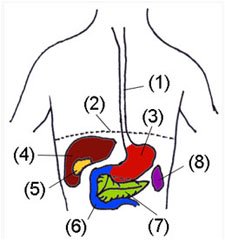
The location and position of esophagus, diaphragm and stomach can be seen in the diagram below.

Organs affected by GERD and hiatus hernia, esophagus, stomach, esophagus


1 - Esophagus (gullet)
2 - Diaphragm
3 - Stomach


The Sitting Toilet Connection

In his article, "Hiatus hernia: Is It Preventable?" in the Mar 1981 edition of American Journal of Clinical Nutrition, British physician Dr Denis Burkitt wrote of the connection between hiatus hernia and Western (sitting) toilets.

He came to this conclusion based on the higher abdominal pressures arising from sitting -- as compared with squatting -- for waste evacuation and his research:

"Hiatus hernia has its maximum prevalence in economically developed communities in North America and Western Europe. Very large series of upper gastrointestinal tract radiological examinations indicate that this defect can be demonstrated in over 20% of North American adults [of all races].

In contrast, the disease is rare in situations typified by rural African communities. In a careful prospective radiological study of the upper gastrointestinal tract in Nigerians, hiatus hernia was detected in only four of 1030. In Kenya, only one case was found in over 1000 barium meal examinations and in Tanzania, one in over 700 barium studies."

Dr Denis Burkitt was not the only one who had identified the sitting toilet as health hazard and cause of hiatus hernia (and other diseases of the colon).

In 1999, Dr Stephen Sontag, a gastroenterologist, also blamed the Western (sitting) toilet as the main cause of GERD. In his paper, "Defining GERD," in the Mar-Jun 1999 edition of Yale Journal of Biology and Medicine, Dr Sontag explained why and how the using sitting toilets could result in the disease:

"The anti-reflux barrier in children and adults is gradually weakened over time as a result of chronic straining to defecate and straining in an unphysiologic position, both of which stem from our modern day habits of eating a low-fiber diet and living on the high-seated toilet. We suggest that the chronic traumatic hiatal hernia is:

a) The cause of more than 90% of gastro-esophageal reflux disease that stalks the Western world;

b) A direct result of abandoning the popular and worldwide practice of squatting to socialize, eat and defecate; and

c) Our just reward for adopting the "civilized" high sitting position on chairs and modern toilets."

Dr Sontag's article can be found on this page.


Is There Anything That You Can Do About It?

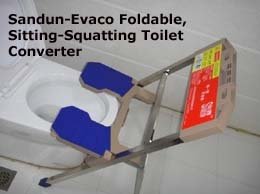
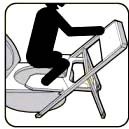
A good way to lower the your risk of GERD and hiatus hernia would be to stop using sitting toilets. If you do not have any squatting toilet at home, an easy way would be to get a toilet squatting platform.

Go from GERD and Hiatus Hernia to Home Page

Have A Great Story About This Topic?

Do you have a personal account about the topic discussed on this page? Please consider sharing it. You can be sure that many people in the world would love to read about and greatly benefit from your experience. It's easy to do. Just let your words flow. Thanks for sharing!

Enter Your Title

Tell Us Your Story! [ ? ]

Upload 1-4 Pictures or Graphics (optional) [ ? ]

Add a Picture/Graphic Caption (optional) 

Click here to upload more images (optional)

Author Information (optional)

To receive credit as the author, enter your information below.

Your Name

(first or full name)

Your Location

(ex. City, State, Country)

Submit Your Contribution

Check box to agree to these submission guidelines.


(You can preview and edit on the next page)


footer for GERD page