|
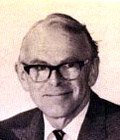
The Life, Work and Legacy of Dr Denis Burkitt
Burkitt’s contributions to the health and medical professions are profound and were based on his first-hand observations in Africa during the second World War, where he served as an army doctor. Dr Denis Burkitt was born on February 28, 1911 in Enniskillen, County Fermanagh, Ireland. He attended Portora Royal School in Enniskillen and entered Trinity College in Dublin in 1929. There, he started in engineering before transferring to medicine; he passed the Edinburgh Royal College of Surgeons fellowship exams in 1938.
During the second World War, Burkitt served with the Royal Army Medical Corps in England, Kenya and Somaliland. It was during his work in Africa that Burkitt popularized two theories that would go on to make great waves in the medical community. The first thing that Burkitt realized was there was a much lower incidence of colon cancer in Africa than there was in Europe and America. Dr Denis Burkitt deduced that the difference came not from genetics, but from habits. He noted that Africans who had emigrated to the West and took up Western habits, or those who were raised with European norms had the same rates of colon cancer as Europeans. Burkitt put forward two theories on this. The first one has survived to the present day; the other was less popular but is still a source of discussion among medical specialists. The first theory was that a diet rich in fiber could prevent a wide variety of intestinal issues, like appendicitis and colon cancer. This was one that quickly caught the eye of the medical world and caught on rapidly even though there was a lack of supporting data. In recent years, several major studies have begun to reveal that fiber – while important – does not make an appreciable difference in colon cancer. Dr Burkitt's second theory, which is starting to garner more attention, was that the squatting position that native Africans used to defecate was what was reducing their incidence of colon cancer. This theory was glossed over by the media at the time due to sensibilities regarding bodily functions. However, an increasing number of enlightened medical and health experts today are beginning to pay more attention to Burkitt's theory in the face of the growing epidemic of colon diseases.
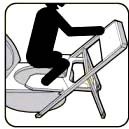
As a result of further research on the importance of toileting posture, several important facts have been emerged. One was that the cecum (DIAGRAM) cannot be completely emptied in the sitting position. It is only in the squatting position that the cecum could be squeezed empty (of waste). Sitting will not and would lead to fecal stagnation in the cecum and the appendix. More importantly, pushing down with the diaphragm while in the sitting position can inadvertently cause waste to enter the appendix. With these discoveries, there is now an increasing and growing awareness of the link between toileting posture and intestinal health. In a life of service in the fields of health and medicine, Dr Denis Burkitt has put forward two theories that have made the world think long and hard about the cause and effects of Western dietary – and, increasingly, toileting – habits and practices. Close This Page Go from Dr Denis Burkitt to Home Page
|

The Best Toilet Converter in The World Today!


Helping People All Over
The World Achieve
Good Health Through
Correct Toileting Posture
Watch video on the
origin and story of
the Sandun-Evaco
toilet converter

All about Life,
Hope and Truth...

FREE:
One of the most
astounding books
you will ever read
in your life!