|
and Squatting Positions |
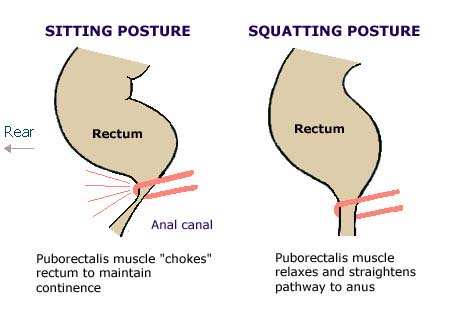
The puborectalis muscle, in turn, is dependent on whether a person sit or squat...
In the sitting position, the puborectalis muscle grips the rectum in a "choked" position to maintain continence.
Elimination is more difficult because of the natural resistance of the bend.
However, in the squatting position, the puborectalis muscle relaxes its grip, which results in the straightening of the final pathway, making it easy for waste to be expelled.
Reference: The Anal Canal and Rectum: Their Varying Relationship and Its Effect on Anal Continence, Diseases of the Colon and Rectum, 1966: 9, 449-452; by Tagart REB
Close This Rectum Page
Go to Home Page

The Best Toilet Converter in The World Today!


Helping People All Over
The World Achieve
Good Health Through
Correct Toileting Posture
Watch video on the
origin and story of
the Sandun-Evaco
toilet converter

All about Life,
Hope and Truth...

FREE:
One of the most
astounding books
you will ever read
in your life!