|
The Cecum
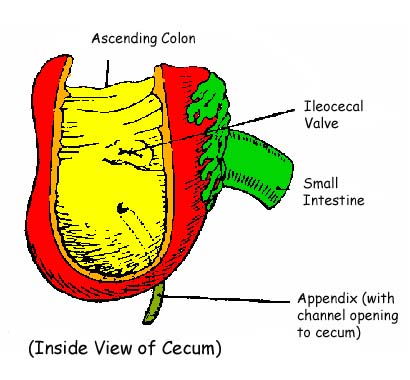
Shaped like a pouch, the cecum (also known as caecum) is where the colon begins. It is connected to the small intestines through the ileocecal valve. The ileocecal valve is the inlet valve of the colon. It acts as a one way valve to allow food wastes to flow from the small intestines into the colon, but prevents waste in the colon from leaking into the small intestines. Located below the ileocecal valve is the appendix, which has a channel opening. For obvious reasons, all the organs at this 'traffic junction' for the flow of waste - caecum, ileocecal valve and appendix - must be cleared of waste on a daily basis. This can only be achieved by using the squatting position for waste evacuation. In the squatting position, the right thigh, pressing against the lower abdomen on the right side of the body, 'squeezes' the caecum to force wastes upwards into the ascending colon and away from the appendix, ileocecal valve and small intestines. As a result of waste being pushed away and out of the caecum, the appendix would never be clogged with waste. The ileocecal valve also stays securely closed to guard against any leakage of waste into the small intestines. |

The Best Toilet Converter in The World Today!


Helping People All Over
The World Achieve
Good Health Through
Correct Toileting Posture
Watch video on the
origin and story of
the Sandun-Evaco
toilet converter

All about Life,
Hope and Truth...

FREE:
One of the most
astounding books
you will ever read
in your life!